Situational awareness is sometimes described as a three part process. The first is a perception of the environment in space and time, with your place in it, including awareness of all of the elements within the limits of your perception. The second is about building knowledge of how the elements within your purview may interact and change as parts of a larger process. The third progression is about acquiring the ability to predict next steps and outcomes based on your knowledge of the “system” or processes (above) working together.
In fishing, situational awareness identifies elements in the fishing environment like rocky structures, reefs, shoals, and islands along with vegetative communities and other features that are attractive to fish. Secondly, anglers with good situation awareness skills have learned how habitat features interact to attract and hold different kinds of fish. Over time, observant anglers learn how to predict the likelihood of encountering fish in these locations as they gradually become more capable anglers.
How can anglers use it?
Experienced anglers know the value of focus in fishing and the effort required to concentrate on the tasks needed to interpret a steady flow of new information from the fishing environment. Situational awareness is easily lost through distraction and on those hot, summer days when focus gives way to day-dreams and less onerous preoccupations. The brain is notoriously lazy and also influenced by a mind that is only partly under your control.
Situational awareness in military or strategic applications ultimately seeks ways to predict how an opponent will act in a given or pending situation. The same applies to fishing. The three-step progression of situational awareness gives anglers insights into fish preferences and how fish make biting decisions.
While understanding the adversarial mind is an obvious advantage in practicing the art of war, sports, games of strategy like chess and other competitive ventures, it is equally essential to know yourself in fishing. Anglers make decisions constantly, profoundly impacting their fishing outcomes. These decisions are influenced in a positive sense by learning and practice. But decisions are also beset by internal uncertainties, old habits, and firmly-held beliefs. Every human brings internal strengths and barriers to the fishing game. Situational awareness encourages anglers to look inwardly as well as externally for new ways to enhance their fishing opportunities and outcomes.
Humans are pattern seekers. Every waking moment our senses scan the environment for cues that might predict opportunities or threats. Once a cue is identified, it is used by associative memory to see if it matches other information stored as patterns in memory. Where a match occurs, the mind probes more deeply to obtain a clearer picture of the potential pattern and any threat or opportunity it may present.
Pattern recognition is used by anglers to identify good fishing locations and the kinds of lures and presentations that might work well in a similar-appearing situation. Most folks use pattern recognition intuitively to guide them on new waters.
Like many aspects of fishing, pattern recognition can operate at several different levels of sophistication. As anglers become more skilled in recognizing opportunities (and in avoiding time consuming dead-ends), they are able to detect increasingly subtle indicators of potential patterns. Research has shown that experienced pattern seekers can sometimes identify complete patterns from partial evidence that might be overlooked by a less experienced observer (or angler).
How can anglers use it?
Pattern recognition is a cognitive process that functions continuously to provide us with vital information that might concern our interests or even save our life. Pattern recognition is the operative function of intuitive fishing and is behind all aspects of intuition as outlined in the section above.
Anglers are assisted in the development of predictive abilities by pattern recognition, but also by remaining consciously connected and focused on their fishing tasks. Intuitive anglers may fish by “feel” but they remain acutely aware of their surroundings, and the stream of data entering their senses (see situational awareness below). Intuitive anglers track changes as they fish through targeted habitats for specific species, using their fishing rods like probes to scope out the nature of the fish-supporting “infrastructure” hidden below. Through electronics and a sensitive touch, they can map-out a “blueprint” for the location using their rod tip to gather evidence about the suitability of the habitat for fish, or direct contact with them. Anglers use a sophisticated array of tools to convey data about fish attracting features. They also use an elaborate, cultured repertoire of feelings, representing the countless sensations transmitted by characteristics of the fish’s environment (like the clicking of lead or tungsten jigs identifying the presence of a rocky bottom). This data is supplemented by the signature impressions of each species reacting to a bait and conveying not only their presence but also an indication of their activity level or interest in a particular presentation.
Sensory data is used by anglers to plug into the status of the existing system and its processes. Fish convey their presence and interest in a number of ways which are gradually incorporated in the abilities or repertoire of adaptive anglers. A number of researchers have noted that pattern recognition may be the brain’s way of analysing such varied information as it becomes available, to assist our fishing minds in predicting the future.
Like the slower, analytical aspect of conscious thought, pattern recognition can be taken out of the “auto-programing” mode and used deliberately to provide more and better fishing information to users. Anglers can enhance the performance of pattern recognition through experimentation and testing ideas in particular applications (see “The Adaptive Angler” for references and examples). These tests might be about how certain species relate to their habitat options in a specific waterway, at a given time of year. Vegetative and structural elements can be matched with the occurrence or absence of the species you seek over time and space, thereby offering the angler tangible evidence of patterns along with better associative explanations of fish preferences, going forward.
Intuition comprises one of two minds we bring fishing. The first is the intuitive mind where information acquired by the senses is rapidly evaluated and usually dismissed. The intuitive mind makes quick, often emotional decisions based on personal beliefs, quick impressions (like whether or not you like a new acquaintance) or previous experience. Most of this activity occurs in the subconscious and is seldom brought to our conscious attention (see references in “The Adaptive Angler” and in online sources).
The rational mind entails a slower process of thoughtful deliberation, which is brought to bear in conscious reasoning when we need to resolve specific problems, make decisions, and carefully consider outcomes. In fishing, experienced anglers fish intuitively using a “feel” they have developed for fishing that handles most of the decisions while we fish. Experienced folks know which lures and presentations might be most effective in a given situation and our intuitive mind brings these options forward without much thought.
How can anglers use it?
Intuitive fishing is an amazing gift because it gives anglers an opportunity to incorporate information gleaned from “learning by doing” into the development or enhancement of fishing strategy. This means the lessons learned through practice and time on the water, are not lost but may be stored in the subconscious to be brought out later when the angler faces a similar situation.
There are many remarkable stories gleaned from research (see references and examples in the book) about how lives were saved by intuitive decision makers, such as fire-chiefs, military commanders and first responders. These folks had to make decisions with little information and often lives at stake. Many people acting under extreme pressure could not explain how they made their decisions, or how they knew it would work!
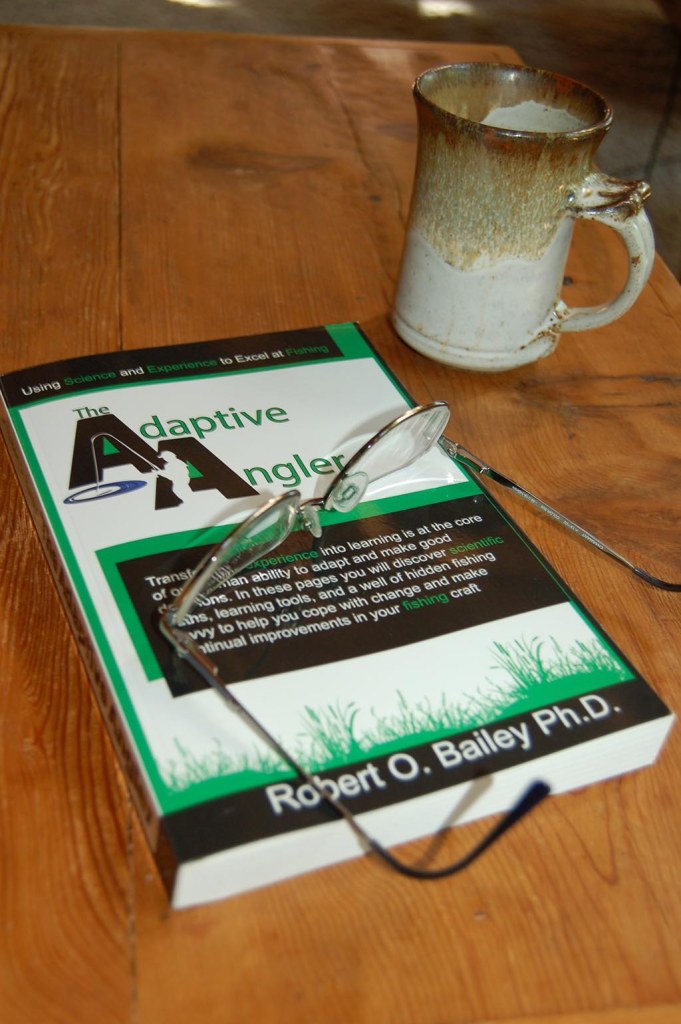
The Adaptive Angler provides much more detail with examples of intuitive fishing. Research has shown that anglers can combine their intuition with a more structured, scientific approach, to maximise the fish-catching potential developed through thoughtful practice and feedback. Anglers should bear in mind though, that intuition as a guide for fishing strategy may be only as good as the depth of experience an angler brings to the challenge. Anglers also build their skills much more quickly in an open, flexible environment, which encourages science-based realities for fish and fishing to emerge.
While science and technology can play a role, “fit” is more about feeling than calculating or reasoning. The ultimate predator understands the prey in ways they often cannot describe. Hunters may “become one” with their prey, knowing where to find it and how the prey will react in a hunting situation. Some pride themselves in targeting mature animals which are more difficult to approach or deceive in hunting situations. These hunters also tend to close in for clean kills at short range. Many folks describe those with exceptional abilities as great “instinctive” hunters. They seem to know how to locate prey and pattern exceptional animals in almost any situation.
How can anglers use it?
The adaptive concept of “fit” applies directly to those who choose to hunt fish. Some anglers fit seamlessly into the fishing environment, they exhibit a “feel” for locating fish, choosing lures and presentations that seem to exactly match the functional requirements to elicit a strike. Advanced anglers understand the role of precision over accuracy, in shaping finely honed, pinpoint presentations. They understand how small apparent differences can produce huge dividends in fishing. Adaptive anglers tend to become masters of efficiency; quickly evaluating local potential and moving on to better opportunities.
While the upper levels of “fit” or becoming one with the fishes is a wonder to behold, fit, like most other parameters in the science of fishing, is distributed across a continuum. Fit starts to emerge with early, fish-catching notions or feelings that paid-off in a strike. From there the concept gradually acquires fish-catching momentum, to finally arrive at the upper levels of what could be considered as intuitive angling. In between, are lodged thousands of hours of practice and feedback, much of which did not result in any hopeful, initial contacts with fish, in the earliest stages.
Functionality drives adaptation. As organisms adjust to new conditions, opportunities or threats, the form that the adjustment or adaptation may take is determined by its function. For example, species living in geographic areas prone to drought may be exceptionally threatened due to a changing climate. Some fish in this situation, have developed a limited ability to move short distances over land to more stable water. However, the downside for these travellers may be a high predation rate when an overland migration is located by terrestrial and avian predators. In response to this need for protection, it may become advantageous for the migrating species to travel at night (change behavior) or develop camouflage on parts of the body exposed to predators. The form of this camouflage (design and coloration) would blend perfectly with the background, meeting the fish’s need for protective cover during its short, overland journey.
How can anglers use it?
The biggest lesson to be drawn from adaptive insights into nature is that everything from physical attributes of a given species to physiological processes, behavioral characteristics, and appearance, all exist in the forms we observe for a reason. Most of the research in natural sciences is aimed at understanding these reasons. Scientists observe natural processes and behavior to identify relationships, repeated patterns and ultimately, causal explanations about why things happen, or exist in the manner or form that they do. This is the thinking process and method of a progressive angler.
Knowledge is the key to fishing wisdom. Knowing that fish are not scattered at random across a waterway, but inhabit specific locations that meet their particular needs, with accompanying behaviors that serves the essential functions in a fish’s life, provides insights into the reasons fish make the choices they do. This basic understanding of the functionality of fish life-processes and behavior is the foundation for good fishing decisions.
For example, choosing lures is a common ritual for anglers. In purchasing, we examine the color, size, and form of the lure. On the first outing, we may select the lure and run it alongside the boat to see how it moves in the water. We often think or say, “if I was a fish, I would bite that.” While observing a smoothly functioning lure at boat-side is good to verify the performance of an untested product, it is essential to also look at lures from a functional perspective. This means determining what species will be targeted with the lure and the environmental circumstances prevalent in fish-holding locations at a given time of the year. Biology and environmental conditions are consulted to help identify the principal factors influencing fish behavior and location, like water depth and clarity among others. Once the basic performance requirements for a given lure in a certain location are established, the functionality of lure design and other features, including the depth at which it will need to perform, are all considered in the final decision. Exactly like choosing a tool with all the correct functional attributes to suit a specific job.
“Will that be the supersized combo?” Success in our modern culture is often framed by the twin deities of more and bigger. In spite of our druthers, we sometimes admire and envy folks with more and bigger vehicles, houses, off-shore bank accounts and so on, that characterise the accumulation of wealth and power in our post-modern world.
More and bigger fish caught also drives perceptions of expertise and highlights the thrill of success in fishing. Most skillful anglers enjoy some recognition of their demonstrated abilities to catch more and bigger fish. Apart from winning competitions, anglers are also justified in their quest for more and bigger fish because the bigger the fish, the more exciting it can be at the end of the line. Once bitten by the thrill of landing a truly big fish, few anglers can resist the temptation to repeat the experience.
Nevertheless, perils lurk in a fishing addiction focused on more and bigger. Anglers driven by such dreams will add many disappointing days to their fishing roster, as they fall short of these magical goals. Catching lots of big fish is seldom an everyday event. Anglers beholden to the twin gods, are more likely to experience their wrath than their benevolence.
The angler’s dilemma is about reconciling “more and bigger” with the other values of fishing. The desire to catch more and bigger fish is a valid aspiration. Hope in fishing comes with heady anticipation and “hands-on” thrills in a natural setting. But a fixation on more and bigger may diminish other worthy goals, like time spent on the water with family and friends, or the restorative value of contact with nature. The demand for more and bigger fish can exert tremendous pressure on competitive and recreational anglers alike, altering moods and behavior on the water. Since most anglers value all aspects of fishing but would still like to catch more and bigger fish, they may need to find a balance in how they spend their time fishing. In striking that balance, it might be useful to consider that pursuit of “more and bigger” is an elusive, moving target which in itself, is destined to be never enough.
Fishing through a learning lens is all about getting the most out of fishing without sacrificing any of the values. But it is also about making you a better angler. Putting learning first creates a more positive, productive context for realizing all of your fishing goals, including those needed to support the quest for more and bigger fish.
Doing the same things over again, making the same mistakes, going back to the same places and using the same lures and presentations most of the time are indications that learning is not taking place. There is an old cliché about insanity being defined as “doing the same thing over and over, while looking for a different outcome,” that seems to fit anglers trapped in the rotating void of a black fishing hole, looking for some way to break the gravitational inertia of ingrained habits.
The fishing learning lens casts a different, more positive light on how we define fishing success. Catching more and bigger fish is a big part of the thrill in angling and these two prominent aspirations will always preoccupy the minds of anglers. But learning offers the opportunity to incorporate “more and bigger” goals for fishing as part of an adaptive strategy, which would improve the abilities of anglers to produce more of these commodities, along with knowledge and other benefits and values of fishing. This win-win approach to learning and self-fulfillment through improving fishing success, will help anglers balance all aspects of their time with a fishing rod in hand.
Adaptive anglers are focused on learning. They determine what they would like to know before they leave the dock, usually as part of a personal, longer-term information-gathering (or research) agenda. They shape up the knowledge inquiry with questions that will guide their thinking during the day (learn how to set this up in the book). Since learning is the goal, there is never a “bad day” on the water. Each day brings a measure of success in moving the fishing yardsticks forward. There are no winners or losers in this fishing game.
Pressure to perform is legendary in competitive fishing. While this is the life-blood of competition, it sometimes seeps into relationships with families and friends, where it can become a corrosive influence. Some folks are naturally competitive, but others seek the simple, unencumbered pleasures of a relaxing and fulfilling day on the water. Most adaptive anglers keep competition in perspective with learning and other values. Their only competition may be in principle with themselves, as they seek to excel in fishing.
Putting learning ahead of all other goals and objectives in fishing builds a more solid foundation for expanding your fishing knowledge, as you learn more and are empowered to ramp up your fishing success. While more and bigger fish are always welcome, it is fishing knowledge over the long-run that creates real success and innovation. Without knowledge, anglers are adrift in the fog of ignorance, with no guiding light. Memories of great catches are most cherished in fishing, but those memories become much more meaningful when you put your own abilities in play to produce an outstanding result.
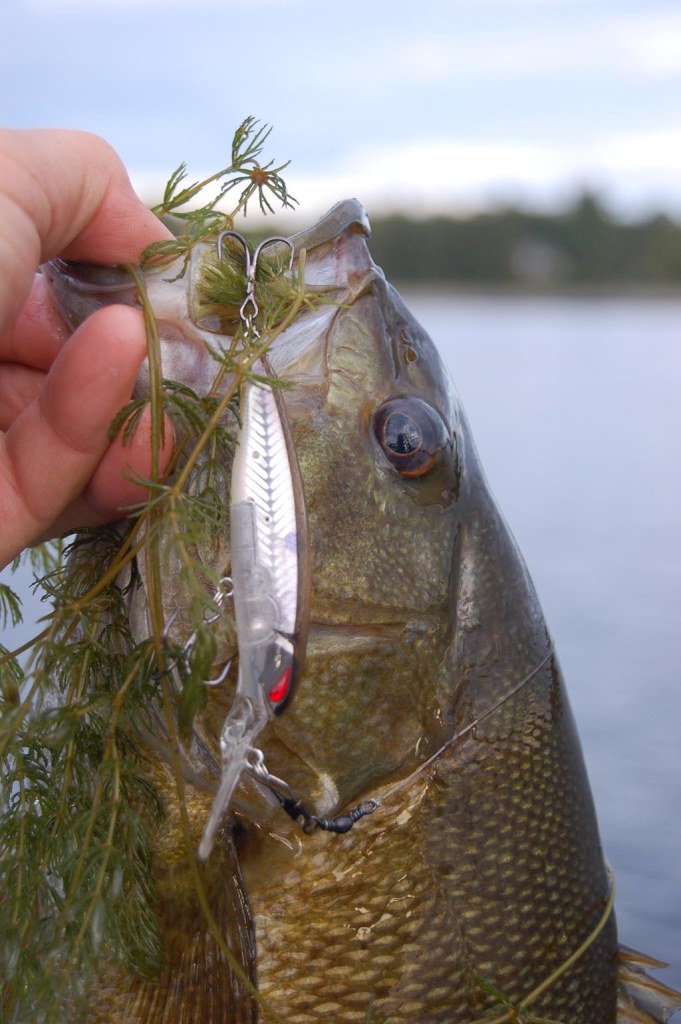
Every angler knows the only constant in fishing is change. Adaptation is nature’s way of coping with change and adjusting to new conditions. Changes may be small, like a fish moving up or down in the water column to compensate for changing atmospheric pressure. But change can also entail events like major shifts in environmental productivity, water levels and vegetative communities that have larger impacts on fish. Organisms (plants, animals) are constantly exposed to environmental uncertainty and pressures to adapt to new threats and opportunities. Change can also be progressive, as witnessed in smallmouth bass numbers and size over the past three decades. Smallmouth have flourished across the continent with rising temperatures, longer summer seasons for growth and the arrival of new, highly nutritional food resources like round gobies. A four pound smallmouth in my father’s time was a real trophy. Now anything under six hardly raises an eyebrow.
Adaptive fishing applies adaptation principles (including the secret seven listed here) to fishing. Anglers embracing change learn how to cope with new and different situations. Progressive anglers expect change and learn to manage it with the kind of thinking as well as practical tools provided by “The Adaptive Angler.” Those who fear change and attempt to avoid it may become marginalized in a dead end, isolated from a world that has moved beyond their grasp. In nature, failure to adapt has low survival potential and little reproductive value. Inevitably, these individuals and species are replaced by more adaptable organisms over time.
How can anglers use it?
Understanding adaptation is a gift to anglers. It allows them insight into the dynamic nature of life interacting with a constantly changing environment to create new and improved ways of surviving and leaving their genetic blueprint in future generations. Anglers who embrace change use it to understand what is happening in the aquatic system and how to track changes to stay on top of the fish through each season. Adaptable anglers also know the value of a good observation coupled with an open mind. There is always a better way waiting to be found in nature and in how you fish.
Adaptive fishing brings the power of insight backed by science to see the world as it is. This knowledge, combined with a practical outlook helps anglers develop the tools, strategies and tactics needed to identify the best fishing opportunities in a dynamic world. The book will show you how to intervene more efficiently and effectively in the change process with your fishing rod in hand.



 adaptiveangler.com