

What is it?
Intuition comprises one of two minds we bring fishing. The first is the intuitive mind where information acquired by the senses is rapidly evaluated and usually dismissed. The intuitive mind makes quick, often emotional decisions based on personal beliefs, quick impressions (like whether or not you like a new acquaintance) or previous experience. Most of this activity occurs in the subconscious and is seldom brought to our conscious attention (see references in “The Adaptive Angler” and in online sources).
The rational mind entails a slower process of thoughtful deliberation, which is brought to bear in conscious reasoning when we need to resolve specific problems, make decisions, and carefully consider outcomes. In fishing, experienced anglers fish intuitively using a “feel” they have developed for fishing that handles most of the decisions while we fish. Experienced folks know which lures and presentations might be most effective in a given situation and our intuitive mind brings these options forward without much thought.
How can anglers use it?
Intuitive fishing is an amazing gift because it gives anglers an opportunity to incorporate information gleaned from “learning by doing” into the development or enhancement of fishing strategy. This means the lessons learned through practice and time on the water, are not lost but may be stored in the subconscious to be brought out later when the angler faces a similar situation.
There are many remarkable stories gleaned from research (see references and examples in the book) about how lives were saved by intuitive decision makers, such as fire-chiefs, military commanders and first responders. These folks had to make decisions with little information and often lives at stake. Many people acting under extreme pressure could not explain how they made their decisions, or how they knew it would work!
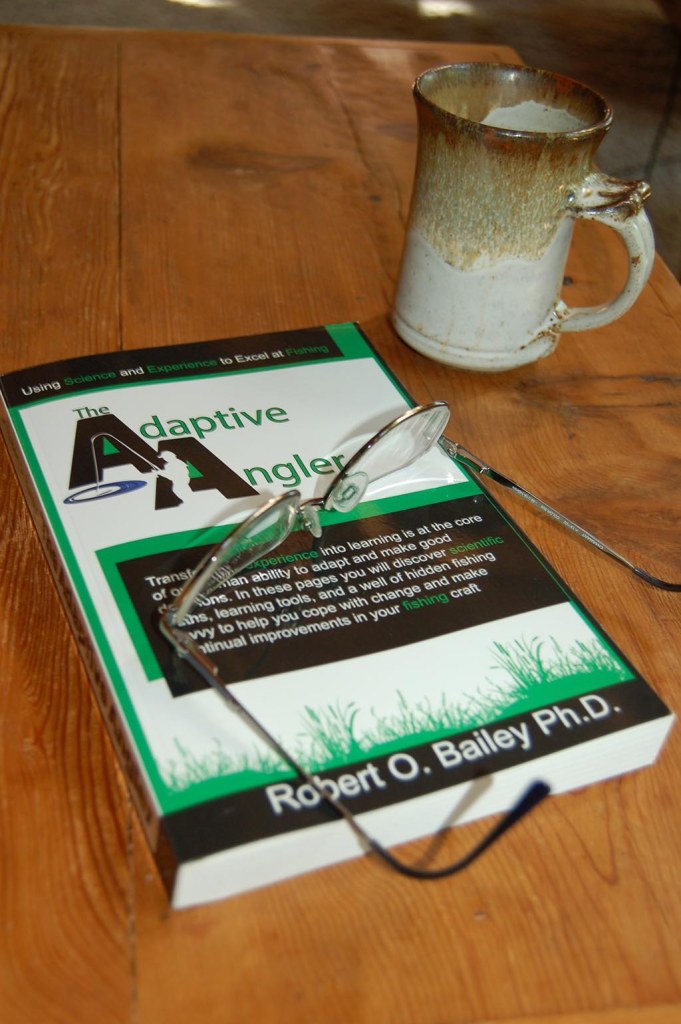
The Adaptive Angler provides much more detail with examples of intuitive fishing. Research has shown that anglers can combine their intuition with a more structured, scientific approach, to maximise the fish-catching potential developed through thoughtful practice and feedback. Anglers should bear in mind though, that intuition as a guide for fishing strategy may be only as good as the depth of experience an angler brings to the challenge. Anglers also build their skills much more quickly in an open, flexible environment, which encourages science-based realities for fish and fishing to emerge.
 adaptiveangler.com